Deciding between a Santa Monica condo and a single-family house can feel like choosing between two great lifestyles. You want the right mix of location, space, cost, and ease. The good news is you can make a confident call once you understand how prices, taxes, carrying costs, and daily life differ here. This guide breaks down the tradeoffs with local specifics, so you can weigh what matters most and move forward with clarity. Let’s dive in.
Santa Monica prices today
Santa Monica remains a premium market. Redfin reported a median sale price of about $1.504M in January 2026, while Zillow’s Home Value Index showed a typical home value near $1.67M as of January 31, 2026. These data points move quickly, so always confirm current figures before you write an offer.
Single-family homes usually trade at a premium to condos. Recent snapshots showed single-family medians in the high single-millions, including an example near $1.85M in late 2025, while condo medians commonly land in the low-to-mid-million range depending on location and amenities. On a per-square-foot basis, recent quarter snapshots for Santa Monica overall have trended around $980 to $1,100. High-end oceanfront condos can exceed many inland houses, so focus on specific neighborhoods and buildings.
Realtor-reported neighborhood medians often show North of Montana at the higher end, with Wilshire-Montana and Ocean Park lower relative to the city median. Expect meaningful differences by pocket and product type.
Where condos and houses cluster
Single-family pockets
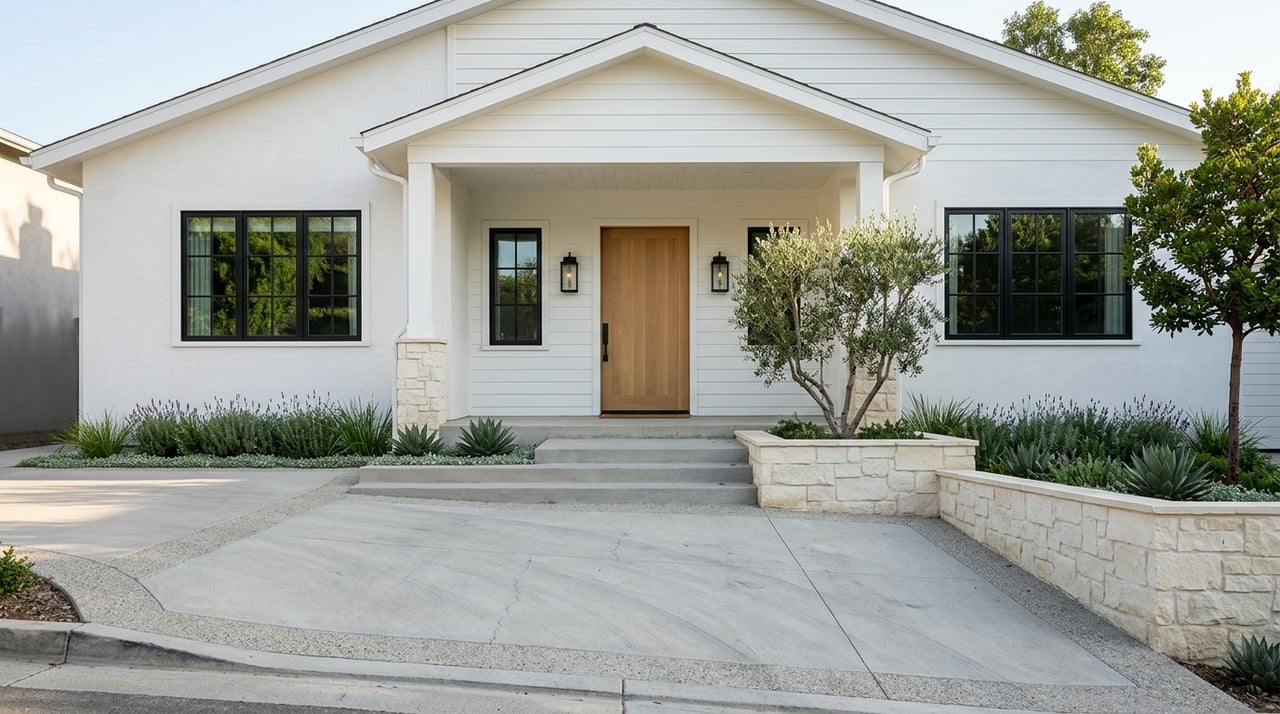
If you want more private outdoor space and detached living, look to North of Montana, Sunset Park, and select pockets of Wilshire-Montana. Lots tend to be larger, and pricing reflects that. Inventory can be lean, so be ready to move when the right fit appears.
Condo and townhome hubs
If you prioritize walkability and lock-and-leave living, focus on downtown near the Third Street Promenade and Broadway, Ocean Avenue along the Bluffs, Ocean Park and Main Street, and infill buildings near Santa Monica College. Expect a mix of boutique walk-ups and full-service buildings with amenities near the beach and downtown.
Upfront costs and transfer tax
Purchase price is the headline difference. Condos usually offer a lower entry point in the same neighborhood band, while single-family homes ask more for land and privacy. For high-value sales, Santa Monica’s documentary transfer tax is a key line item. The city’s tiered rates are:
- $3 per $1,000 under $5,000,000 (0.3 percent)
- $6 per $1,000 from $5,000,000 to $7,999,999.99 (0.6 percent)
- $56 per $1,000 at $8,000,000 and above (5.6 percent)
You also pay the Los Angeles County documentary tax. For the city portion alone, here is how it pencils out:
- $4,000,000 purchase: $12,000 city transfer tax
- $6,000,000 purchase: $36,000 city transfer tax
- $8,000,000 purchase: $448,000 city transfer tax
Review the city’s rules for the latest rates and examples on the official page for the Santa Monica documentary transfer tax.
Monthly carrying costs to expect
HOA dues and what they cover
Condo HOA dues in Santa Monica vary by building age, amenities, and coastal exposure. Typical ranges:
- Smaller, older, low-amenity buildings: about $300 to $700 per month
- Mid-range amenity buildings: about $600 to $1,200 per month
- Luxury oceanfront or full-service towers: about $1,200 to $3,500+ per month
Dues often cover water, exterior and common-area maintenance, building staff, and some utilities. Watch for red flags like low reserves or talk of special assessments. For a helpful overview of what to expect in local condo HOAs, see this guide to HOA fees in Santa Monica.
Property tax and insurance
Under California’s Prop 13, the base property tax rate is about 1.0 percent of assessed value, plus voter-approved parcel taxes and special assessments. In practice, many Santa Monica buyers see an effective rate around 1.1 to 1.3 percent. Confirm the exact total with the county assessor based on your target property.
Insurance needs differ by property type. Condo buyers typically carry an HO-6 policy for interior finishes, contents, liability, and loss assessment. Single-family homeowners purchase a dwelling policy and often add earthquake coverage. Earthquake insurance is separate, and HOA master policies vary in scope, so review the master policy, the deductible, and your HO-6 endorsements with an insurance professional. Learn more in this Los Angeles condo insurance explainer.
Maintenance and near-term risk
Single-family homes give you full control over your property. You manage the roof, exterior paint, landscaping, pool, fencing, and all capital projects. That control can be a plus if you want to customize and expand, but it also means time and cost exposure.
In condos, the HOA manages building exteriors, roofs, elevators, and common systems. Your costs arrive as predictable dues and potential special assessments. To gauge risk, review the HOA budget, reserve study, percent-funded reserves, recent assessments, owner delinquency rates, insurance scope, and any litigation. Many associations have faced higher master-policy premiums and deductibles in recent years, which can drive dues or one-time assessments. Ask whether the master policy uses replacement cost and confirm the current deductible.
Privacy, space, and daily life
Single-family homes typically offer more private interior and exterior space. That can make it easier to add outdoor play areas, a pool, or an ADU if permitted. If you prioritize a quiet neighborhood feel and private yard, a house often wins.
Condos and townhomes excel for ease and access. Lock-and-leave living, less exterior maintenance, and built-in security in full-service buildings are common draws. If you travel frequently or want to be close to restaurants, the beach, and services, a condo can simplify your life.
Parking is an everyday consideration. Santa Monica uses residential parking permits and manages guest access in beach-adjacent and downtown areas. Confirm assigned parking, EV charging, guest options, and local residential permits early.
HOA documents, timing, and approvals
In California, sellers must provide governing documents, budgets, insurance summaries, and disclosures for condo and townhome resales. Under the Davis-Stirling Act, the association must deliver the statutory resale disclosure package within 10 days of a written request. Buyers usually receive a short rescission window upon receipt, so timing matters.
Use this simple timeline:
- At listing or immediately upon offer acceptance, order the HOA resale package.
- On receipt, review the reserve study, budget, percent-funded reserves, meeting minutes, and insurance summary.
- Confirm the master policy deductible, whether coverage is walls-in or studs-out, and ask about any planned capital projects or litigation.
- Request any project-specific questionnaires your lender requires and confirm board approval timelines for renovations.
You can read the Davis-Stirling Civil Code for the statutory disclosure framework.
Financing and project eligibility
Condo financing can hinge on the building. Some loans require specific reserve levels, insurance standards, or project approvals. Older complexes with limited reserves or pending litigation can limit options or slow approval. Before you waive financing contingencies, ask your lender to pre-screen the project and confirm eligibility. That one step can save weeks.
Local rules that can affect your plan
- Rent control. Santa Monica’s rent control program covers many units built before April 10, 1979, with specific rules and exemptions. If you plan to rent now or later, check whether a unit is covered and learn how Maximum Allowable Rent and annual adjustments work on the city’s rent control page.
- Airport plans. The Santa Monica Airport is scheduled to close to aeronautical use on December 31, 2028. If quick private-flight access is important, plan alternatives like Van Nuys, Hawthorne, or LAX and stay informed about future land-use plans.
- Parking permits. For homes and condos in permit-heavy areas, confirm residential permits, guest permits, and any building-specific rules.
Decision checklist for your situation
Use these prompts to rank needs and test total cost before you choose a path:
- Primary lifestyle need: rank beach access and walkability, commute convenience, and nightlife against private yard, quiet streets, and space for staff.
- Flexibility and control: do you want to remodel, add an ADU, or expand soon? Houses offer more control, while condos require board approvals and may limit certain changes.
- Operational tolerance: do you prefer managing yards, pools, and contractors, or do you want minimal upkeep with a concierge and staff on-site?
- Financial tolerance: calculate total monthly cost, including mortgage, property tax, insurance, HOA dues, utilities, parking, and a maintenance reserve. For high-value purchases, model the Santa Monica documentary transfer tax tiers to understand your out-the-door number.
- Lender and insurance checks: before you waive contingencies, ask your lender about project eligibility and your insurance broker about master-policy exposure and HO-6 costs and endorsements.
- Rental plans: if you may rent in the future, confirm rent control status with the city and understand local registration requirements.
- Schools and routines: review the Santa Monica-Malibu Unified School District resources, test commute times, and preview neighborhood parking and transit options.
Short due diligence checklist
- Order the HOA resale package early and confirm delivery timelines. Delays here often delay closing.
- Review reserves, budget, minutes, insurance summary, and any litigation or capital project plans before your contingency deadlines.
- Confirm insurance scope. For condos, match your HO-6 and earthquake endorsements to the master policy and its deductible. Consider loss-assessment coverage.
- For single-family homes, order general, roof, and sewer inspections and confirm permitted work with the city. Many older properties have legacy improvements that need verification.
- Run neighborhood checks: parking permits, commute patterns, beach proximity, and future city projects that may affect traffic or noise.
Ready to decide what fits your life best in Santa Monica? If you want a tailored side-by-side of specific buildings and neighborhoods, or a clear monthly and closing-cost model for your price point, connect with the team at Pence Hathorn Silver. We will help you compare real options and move with confidence.
FAQs
What is the price gap between condos and houses in Santa Monica?
- Recent snapshots show single-family medians in the high single-millions and condo medians in the low-to-mid-million range, with Redfin’s citywide median near $1.504M (Jan 2026) and Zillow’s ZHVI near $1.67M (Jan 31, 2026); verify current figures before you write an offer.
How much are HOA dues for Santa Monica condos?
- Many buildings range from about $300 to $700 for smaller, older properties, $600 to $1,200 for mid-amenity buildings, and $1,200 to $3,500+ for luxury oceanfront towers, depending on amenities and coastal exposure.
How does Santa Monica’s transfer tax work on high-value sales?
- The city charges 0.3 percent under $5M, 0.6 percent from $5M to $7.999M, and 5.6 percent at $8M and above, plus a county tax; for example, the city portion on $8M is $448,000.
What should I review in a condo HOA resale package?
- Check the reserve study and percent-funded reserves, current budget, meeting minutes, master insurance limits and deductible, any special assessments or litigation, and project questionnaires your lender requires.
Can I rent out a Santa Monica condo after I buy it?
- It depends on local rent-control coverage, HOA rules, and city requirements; many units built before April 10, 1979 are rent-controlled, so confirm coverage and rules with the city’s rent control resources.
Do I need earthquake insurance for a condo in Santa Monica?
- Earthquake insurance is not required by law but is commonly recommended; match your HO-6 endorsements to the HOA master policy and consider loss-assessment coverage for quakes and other events.