Los Angeles is a city of extraordinary innovation. We built an entire bureaucracy capable of making apartments homeless.
According to reporting in The Real Deal and LAist, roughly 259 taxpayer-funded apartments intended for unhoused Angelenos sat vacant in May while public agencies continued paying rent. At approximately $3,400 per month per unit, taxpayers are spending about $10.6 million annually to house nobody.
Mayor Karen Bass’s master leasing program was created with admirable intentions: rapidly secure housing and move people off the streets. In theory, it’s a practical idea. In practice, Los Angeles somehow discovered the one thing harder than building housing in California: filling housing that’s already built.
LAHSA’s explanation is that incoming tenants require qualifying subsidies, many of which have been reduced or paused. But that answer only raises another question: why sign long-term leases without ensuring there would be a reliable source of funding to fill them?
Los Angeles has managed to create the worst of both worlds: vacant apartments, people living on the streets, and taxpayers paying for both.
To be fair to Mayor Bass and her team, homelessness is arguably the hardest public policy challenge in California. The funding streams are fragmented, political priorities shift, and no mayor can control Sacramento or Washington. But uncertainty is precisely why risk management exists. In real estate, nobody signs five-year leases assuming revenue will remain perfect forever. Government shouldn’t either. The funding cuts may not have been entirely foreseeable in their timing or magnitude, but the possibility of funding cuts themselves certainly was.
Meanwhile, federal authorities have frozen LAHSA funding pending an investigation into possible financial mismanagement. When federal bureaucrats begin accusing local bureaucrats of “wanton management of public funds,” it’s generally not a sign that things are running smoothly.
LAHSA has reportedly received nearly $1 billion in federal funding since 2021. Yet encampments remain, sidewalks are still crowded, and apartments sit empty. If this were a private company, management would have changed long ago. In government, we create another committee.
For those of us in Santa Monica, this story seems familiar. Residents have repeatedly approved taxes and supported initiatives in hopes of making visible progress. Yet many still walk through downtown Santa Monica, the Expo corridor, or nearby neighborhoods and ask a simple question: where are the results?
None of this is to deny that homelessness is real or that housing is part of the solution. Both are true. But compassion without accountability eventually becomes performance art.
As a real estate agent, leading the #1 team in Santa Monica, I’ve learned that markets are brutally honest. If a building sits one-third vacant while losing money, ownership changes, management changes, or strategy changes. Reality eventually sends the bill.
Government often works differently. Failure frequently becomes an argument for a larger budget.
Maybe Los Angeles should try something radical: judge homelessness programs not by dollars spent, units leased, or press conferences held, but by actual people permanently housed, because empty apartments don’t solve homelessness. They provide shelter for bureaucracy.
In Other 90402 Real Estate News
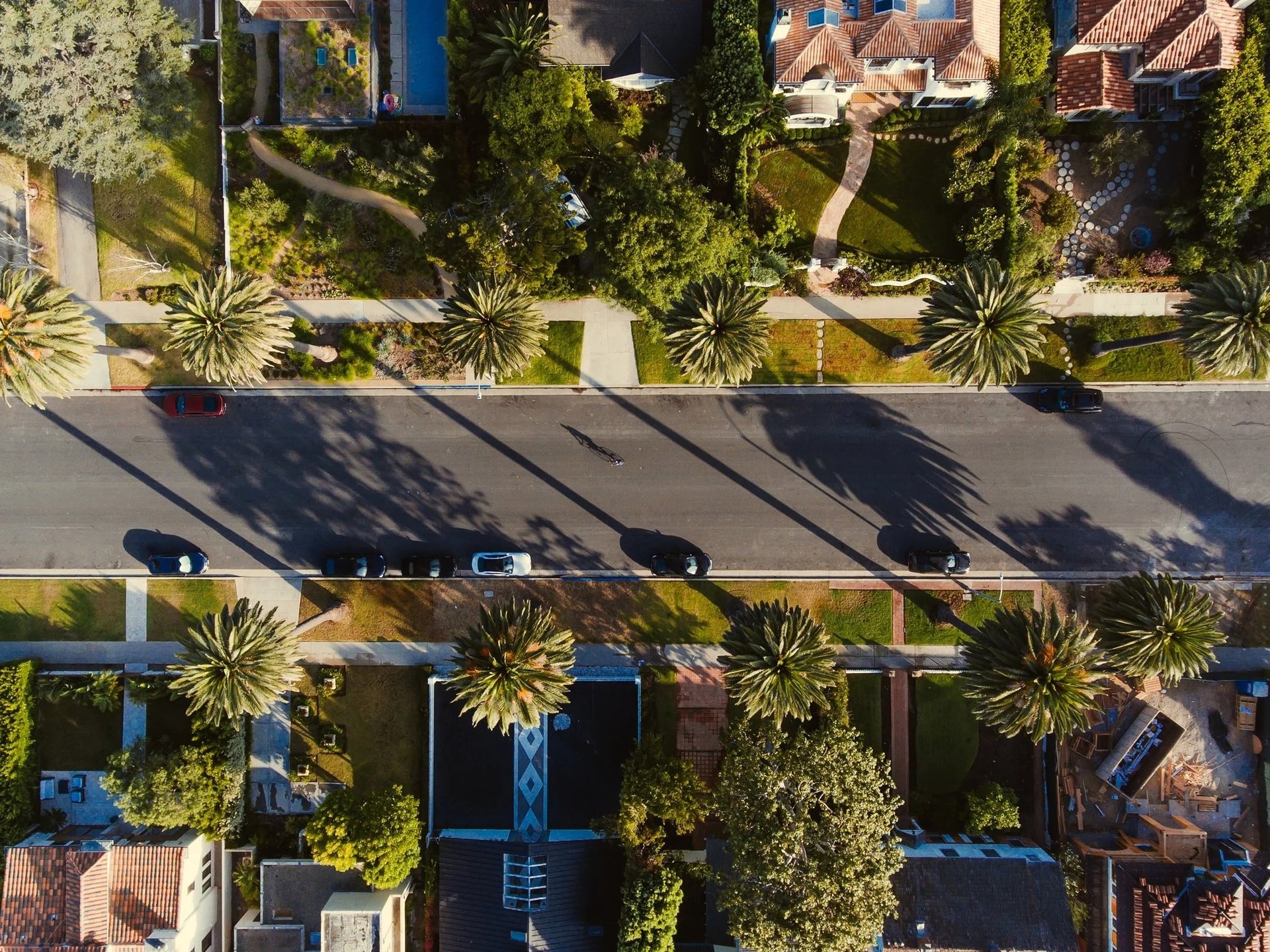
There are 27 Active listings ranging from $4,499,000 to $69,000,000 (this one was initially listed for $110M) in the 90402 “Flats”.
The newest listings:
402 11th Street – Listed for $7,995,000. This is a 5,000sqft 2-story Spanish on a 7,500sqft corner lot- great curb appeal! Originally built in 1988 with renovation in 2003, it is now ready for another facelift. Pool and guest house above the garage. Last sold in 2005 for $2,995,000.
415 21st Street – Listed for $5,995,000. English-Traditional, 2-story on a prime 60ft wide lot. Built in 1982 and ready for renovations. Over 4,700sqft with a classic floorplan and large rooms. This one will appeal to end-users and flippers alike- should sell in a bidding war. Last sold, by me, in 1997 for $1,500,000.
315 17th Street – Listed for $4,950,000. Single story Spanish, just under 1,300sqft. Land-value. Clean and livable, but not updated. Located in Gillette Regent Square- 8,900 sqft lot.
321 17th Street – Listed for $4,499,000. Another land-value offering. This one is a 1948 single story Traditional. Located right next door to 315 17th Street (see above) both listings have set an offer deadline of Friday.
506 Georgina Avenue – Listed at an highly ambitious aspirational price of $29,999,999. Spec home builder is planning a 10,000sqft development with an estimated completion in the Summer of 2027. Situated on a 11,000sqft lot, the home will boast a pickleball court, pool and rooftop deck with ocean views. Lot was purchased in April of this year for $6,250,000.
There are four properties in escrow:
628 26th Street – Listed for $2,695,000.
420 Alta Avenue – Listed for $8,500,000.
428 10th Street – Listed for $8,995,000.
241 19th Street – Listed for $8,995,000.
There have been 13 sold since my last update:
246 16th Street - I sold this house for $4,650,000 after pricing it strategically, to receive multiple offers to sell well above it’s appraisal.
739 18th Street - Sold by Pence Hathorn Silver for $4,800,000. Was listed by an out of area agent for $3,995,000.
350 17th Street – Sold privately for $6,000,000.
220 12th Street - Sold privately for $10,400,000.
609 20th Street - Sold privately for $5,995,000.
243 Euclid Street - Sold for $4,600,000. Originally listed for $3,800,000.
401 26th Street - Sold for $8,822,500. Originally listed for $8,995,000.
703 25th Street - Sold for $8,975,000. Originally listed for $8,695,000.
704 17th Street - Sold for $3,800,000. Originally listed for $3,399,000.
1015 San Vicente - Sold for the asking price of $3,850,000.
451 16th Street - Sold for $6,420,000. Originally listed for $6,950,000.
541 11th Street - Sold for $7,550,000. Originally listed for $7,950,000.
831 Georgina Avenue - Sold for $11,213,000. Originally listed for $13,199,000.