Buying in Venice can feel simple until you start comparing homes. A two-bedroom cottage near the beach, a small-lot townhouse, a canal-front house, and an artist-style live/work space may all sit under the same neighborhood name, but they offer very different layouts, outdoor space, access, and price points. If you want to buy with confidence, it helps to understand how Venice’s home styles shape daily life before you ever write an offer. Let’s dive in.
Why Venice Feels So Varied
Venice is not a one-style neighborhood. According to Los Angeles City Planning, its housing stock includes single-family homes, multi-family dwellings, mixed-use buildings, and industrial structures that house artist galleries and live/work studios.
That layered feel comes from Venice’s original canal system, rail lines, and long history of change. City Planning also notes that lot sizes can range from under 3,000 square feet near the beach to about 5,000 square feet closer to Lincoln Boulevard, which helps explain why homes, yards, and building scale can shift so quickly from block to block.
For buyers, that means Venice is often a style-and-site market as much as a bedroom-and-bath count market. Two homes with similar square footage can live very differently depending on lot shape, access, outdoor setup, and whether the property is a cottage, a modern build, or a canal-front home.
Original Cottages and Bungalows
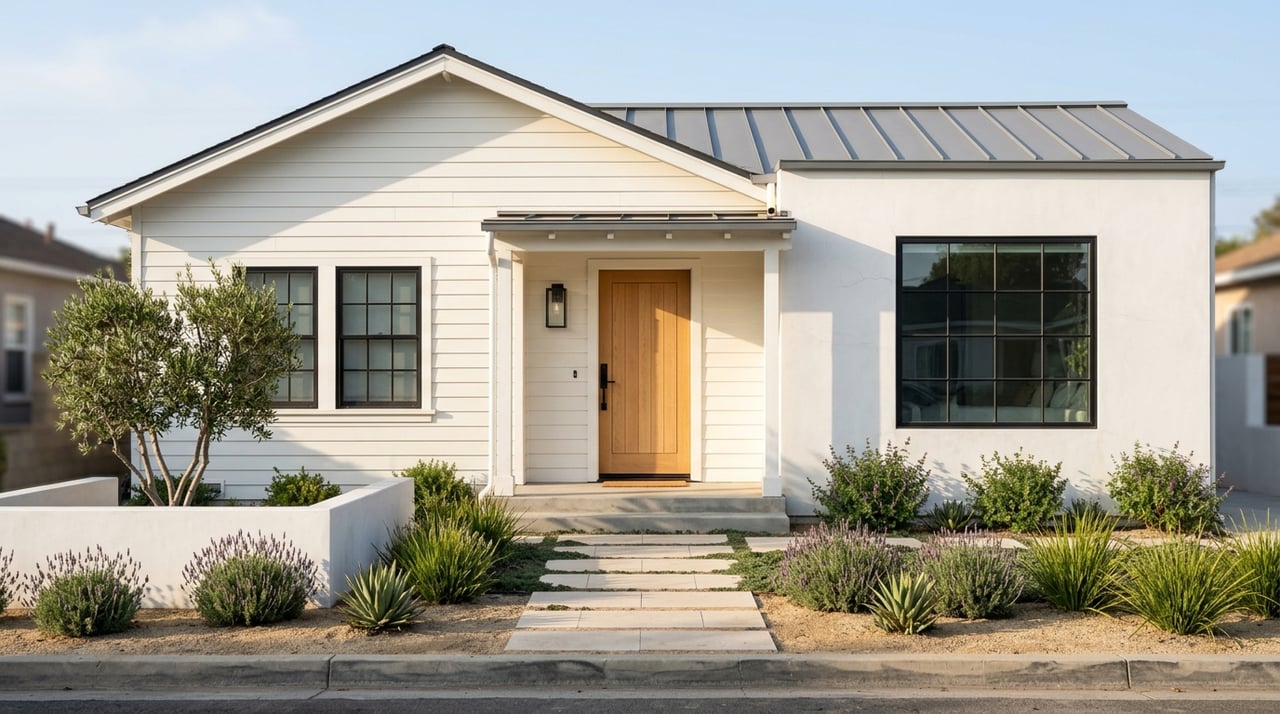
Some of Venice’s most recognizable homes are its early cottages and bungalows. SurveyLA says many of the original Venice cottages date to the teens and 1920s, are modest in size, set close to the sidewalk, and most often reflect Craftsman, American Colonial, or vernacular styles.
These homes usually appeal to buyers who value character, history, and a closer connection to the street. In practical terms, you may find smaller footprints, simpler floor plans, and more limited private outdoor space than you would in newer construction.
Venice also still has bungalow courts, which the LA Conservancy describes as once widespread and now rare examples of community-centered multi-family housing. If a listing mentions a bungalow court, shared courtyard, or cottage cluster, that often signals a different living experience than a standard detached home.
What to notice in older homes
When you tour an original cottage or bungalow, pay attention to:
- Room sizes and ceiling heights
- Storage capacity
- How much separation exists between living and sleeping areas
- Whether outdoor space is private, shared, or mostly limited to a front setback
- How closely the home sits to the sidewalk or neighboring structures
A charming exterior can be easy to fall for, so it helps to match that charm with your day-to-day needs.
Modern Homes and Architectural Properties
Venice is also known for architect-driven modern homes. Research examples from the LA Conservancy show how these properties often respond to tight or exposed lots with sculptural forms, privacy-focused layouts, roof decks, and vertical stacking.
In many modern Venice homes, design is doing a lot of work. Bedrooms may sit farther back on the lot, living areas may rise to upper levels for light and privacy, and outdoor space may show up as a deck, terrace, or courtyard void rather than a traditional backyard.
For some buyers, that is exactly the draw. You may gain striking architecture and efficient use of space, but you should also ask whether the floor plan fits how you live, entertain, and move through a home every day.
What modern layout can mean
A modern Venice home may offer:
- More vertical living
- Stronger privacy from the street
- Roof deck or terrace space instead of lawn area
- Open interiors with fewer traditionally separated rooms
- Creative placement of studios or flexible work areas
If a listing highlights an architectural pedigree, it is worth looking past the design headlines and studying circulation, natural light, and outdoor usability.
Small-Lot Homes and Townhouse-Style Living
Another style buyers may encounter in Venice is the small-lot home. Los Angeles City Planning says the Small Lot Ordinance allows free-standing single-family homes and attached townhouses in multi-family and commercial parts of the city as an alternative to the traditional suburban single-family home.
Current standards address orientation, entryways, façade articulation, roofline variation, pedestrian pathways, landscaping, and common open space. For buyers, the real-world takeaway is often compact footprints, narrower or shared circulation areas, and less private yard space.
These homes can be a strong fit if you want newer construction in Venice without the land size or maintenance of a larger detached property. At the same time, they reward careful review of parking, storage, guest access, and how outdoor space is divided between private and shared areas.
Questions to ask on small-lot properties
Before you move forward, ask:
- Is the home detached or attached?
- Where do guests enter?
- How much private outdoor space comes with the home?
- Is parking direct-access, tandem, or shared in feel?
- How many stairs are part of daily living?
Those details can shape convenience more than the square footage total alone.
Loft-Style and Live/Work Spaces
Venice has long had an artist and live/work identity, and that still shows up in its housing mix. City Planning notes a concentration of industrial structures that house artist galleries and live/work studios, which creates a different kind of inventory than a conventional apartment or townhouse market.
These spaces often favor openness and flexibility. Instead of traditional room-by-room layouts or larger backyards, you may find adaptable interiors, studio-style volumes, and a more industrial character.
That can work well if you want design freedom or multi-use space. It may be less ideal if you prefer a more traditional floor plan with clearly separated rooms and conventional outdoor areas.
Canal-Front and Walk-Street Homes
For many buyers, canal-front and walk-street homes represent the most distinctive side of Venice. The Venice Canals are a registered historic district on the City of Los Angeles Historic Places Register and the National Register of Historic Places, with six canals, about 1.5 miles of waterway, pedestrian bridges, and a single vehicular entrance.
SurveyLA says the original canal district contains modest lots and one- and two-story mostly Craftsman homes, along with Period Revival examples. The result is a setting where architecture, access, and outdoor living all feel different from standard street-front housing.
A canal-front property often trades a traditional yard for water adjacency, decks, patios, and bridge-connected movement through the neighborhood. A walk-street home may offer a quieter pedestrian-oriented approach, but it can also come with a different parking and access rhythm than buyers expect elsewhere in Los Angeles.
What canal and walk-street living changes
Pay close attention to:
- How you access the home on foot and by car
- Whether outdoor space is deck, patio, bridge approach, or narrow side area
- How open the setting feels relative to privacy
- Whether the lot is especially narrow or modest in depth
- How the home’s orientation affects light and sight lines
City Planning also notes that existing walk streets in the coastal zone should be protected and maintained, which shows how important pedestrian access is to Venice’s identity.
Coastal Rules Matter in Venice
In Venice, zoning is not always the whole story. City Planning states that the Venice Local Coastal Program is being updated and places special emphasis on sea level rise and climate change in the coastal zone.
That matters because coastal development rules can go beyond base zoning. If you are considering a property near the beach, canals, or other parts of the coastal zone, it is wise to understand how location may affect future changes, additions, or other property decisions.
For buyers, this does not mean every coastal purchase is complicated. It simply means the site itself is part of the buying equation, especially in a neighborhood where location and home style are so closely tied together.
How Style Affects Price
Venice’s pricing reinforces the idea that this is not a one-size-fits-all market. Recent 2026 market snapshots place Venice in a high-value range overall, with Redfin reporting a March 2026 median sale price of $1,887,500 and Zillow reporting an average home value of $1,830,180 plus a February 2026 median sale price of $2,040,750.
Those figures use different methodologies, so they are best read as a range rather than a single exact benchmark. Still, they help show the broader pricing level buyers are working within.
Canal-front properties sit at a clear premium. Redfin’s Venice Canals data shows a March 2026 median sale price of $5.1 million, though only one home sold that month, and recent canal sales ranged from about $1.90 million to $3.59 million depending on size and condition.
The broader Venice market, by contrast, includes smaller homes selling around $1.17 million to $1.38 million in recent examples. In other words, location scarcity, outdoor setting, and property type can influence price just as much as interior square footage.
How to Read Venice Listings Faster
If you are scanning listings in Venice, certain words can tell you a lot before you ever book a showing. Terms like walk street, canal frontage, roof deck, courtyard, small lot, and live/work often signal major differences in layout and day-to-day use.
A faster way to compare homes is to focus on three basics first:
- Lot shape: narrow, compact, or more conventional
- Outdoor space type: yard, deck, patio, courtyard, or shared area
- Access: standard street entry, walk street approach, rear-loaded parking, or canal-oriented entry
Once those pieces are clear, bedroom count and finishes make a lot more sense in context.
A Smarter Way to Buy in Venice
The best Venice purchase is not always the biggest home or the newest one. It is the home style that best matches how you want to live, how much outdoor space you actually use, and what kind of access and layout will feel right a year from now, not just on showing day.
That is why local context matters so much in Venice. The neighborhood’s mix of original cottages, modern architecture, small-lot homes, live/work spaces, and canal properties creates real opportunity, but also makes side-by-side comparison more nuanced.
If you want help narrowing the field and understanding which Venice home style fits your goals, connect with Pence Hathorn Silver. Our team brings deep Westside market knowledge and a polished, hands-on approach to every step of the search.
FAQs
What home styles will you find in Venice, Los Angeles?
- Venice includes original cottages and bungalows, architect-driven modern homes, small-lot homes, loft-style and live/work spaces, plus canal-front and walk-street properties.
What makes Venice canal-front homes different from other Venice homes?
- Canal-front homes often trade a traditional yard for water adjacency, decks, patios, pedestrian bridges, and a distinct access pattern within the historic canal setting.
What should you look for when buying an older Venice cottage?
- Focus on room sizes, storage, floor plan efficiency, outdoor space, and how closely the home sits to the street or neighboring properties.
How do small-lot homes in Venice usually live?
- Small-lot homes often offer compact footprints, vertical layouts, limited private yard area, and circulation patterns that may feel narrower or more shared than a traditional detached house.
Why do Venice home prices vary so much by property type?
- Venice prices can shift sharply based on location scarcity, canal frontage, lot size, outdoor setting, access, and whether the home is a cottage, modern build, small-lot property, or live/work space.